siemens 01122025

The Shift to Centralized Signaling: Siemens Demonstrates “Signaling X” in Live Metro Operation

For decades, mainline and metro signaling architectures have been built around trackside equipment. Interlockings, object controllers, and associated electronics were physically distributed along the line—each installed inside dedicated trackside housings. Last month in Singapore, Siemens Mobility demonstrated a major step forward: a live metro train operated using its new centralized signaling architecture, “Signaling X.” Rather […]

The Shift to Centralized Signaling: Siemens Demonstrates “Signaling X” in Live Metro Operation Read More »

ewr 01122025

Discontinuous Electrification: Why East West Rail is Choosing Batteries Over Continuous Wires

For over a century, railway electrification meant one thing: continuous overhead wires. But the UK’s East West Rail (EWR)—connecting Oxford and Cambridge—has confirmed it will use Discontinuous Electrification supported by Battery Electric Multiple Units (BEMUs). This represents one of the most consequential shifts in UK railway engineering in decades. What Is Discontinuous Electrification? Instead of

Discontinuous Electrification: Why East West Rail is Choosing Batteries Over Continuous Wires Read More »

dbinfra go 01122025

Germany’s Green Steel Rails: DB InfraGO’s Verified Step Toward Lower-Carbon Infrastructure

The carbon footprint of railway infrastructure is influenced not only by train operations but also by the materials used to build and maintain the network. Steel rails, which require significant energy to produce, are a major contributor to indirect (Scope 3) emissions for infrastructure managers. This year, DB InfraGO, Germany’s rail infrastructure manager, placed an

Germany’s Green Steel Rails: DB InfraGO’s Verified Step Toward Lower-Carbon Infrastructure Read More »

ineco

Spain’s Autonomous Maintenance Step: AESA Authorizes Drone-in-a-Box Operations for ADIF

Spain has taken a significant step in automated railway inspection. The Spanish aviation safety authority AESA (Agencia Estatal de Seguridad Aérea) has granted Ineco, working for infrastructure manager ADIF, authorization to deploy an autonomous drone-in-a-box system for infrastructure inspection. This authorization allows drones to operate remotely, without a pilot at the takeoff or landing site.

Spain’s Autonomous Maintenance Step: AESA Authorizes Drone-in-a-Box Operations for ADIF Read More »

raiport 29112025

Turkey’s Railport: A New Intermodal Hub Supporting the Middle Corridor

The Trans-Caspian International Transport Route (TITR), also known as the Middle Corridor, has gained attention as an alternative Asia–Europe freight pathway. It links Central Asia, the Caucasus and Turkey using a combination of rail and maritime segments. Its attractiveness has increased due to changing geopolitical and operational dynamics affecting other routes. A significant new development

Turkey’s Railport: A New Intermodal Hub Supporting the Middle Corridor Read More »

aurizon 27112025

The Hybrid Heavy-Haul: Why Australia’s Battery Electric Tender May Be the Most Pragmatic Decarbonization Path

Freight operator Aurizon is pioneering the Battery Electric Tender (BET)—a battery wagon coupled with a diesel locomotive—to create a hybrid system for heavy-haul routes. This pragmatic Australian innovation recovers regenerative braking energy and significantly cuts emissions without costly, full-route electrification

The Hybrid Heavy-Haul: Why Australia’s Battery Electric Tender May Be the Most Pragmatic Decarbonization Path Read More »

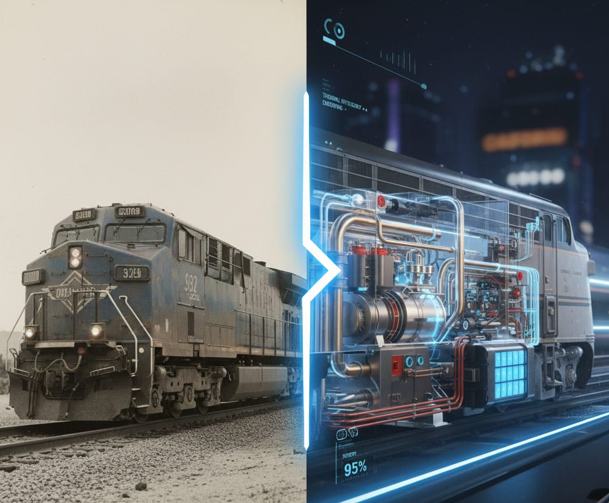
hyorc 27112025

The Efficiency Gambit: Could External Combustion Reshape the US Rail Decarbonization Roadmap?

ZELTECH and Dreamstar Lines are exploring hybrid locomotives using the revolutionary HyOrc Rankine-cycle multi-fuel engine for the LA-SF route. This external combustion technology offers a cost-effective, high-efficiency pathway to decarbonization, challenging the binary choice between full electrification and pure hydrogen fuel cells in North America

The Efficiency Gambit: Could External Combustion Reshape the US Rail Decarbonization Roadmap? Read More »

tazara 25112025

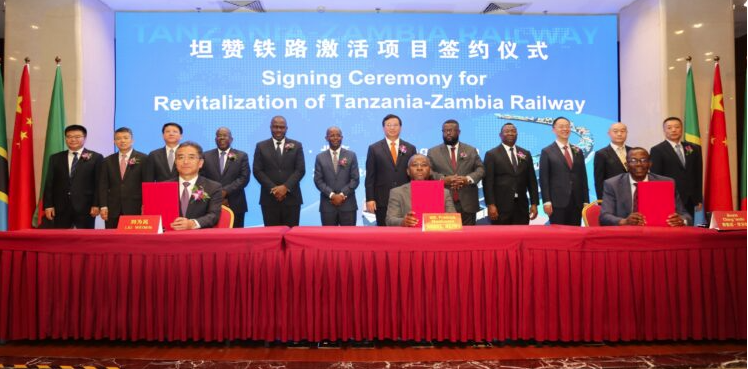
The Copper Corridor Reborn: Can China’s $1.4B Revive the TAZARA Bottleneck?

As global competition for Copper and Cobalt intensifies, logistics has become as important as mining. The West has backed the Lobito Corridor, a modernized export route to Angola’s Atlantic coast. This week, China responded with a major counter-move: a $1.4 billion Public-Private Partnership to overhaul the historic TAZARA Railway, linking the African Copperbelt to Tanzania’s

The Copper Corridor Reborn: Can China’s $1.4B Revive the TAZARA Bottleneck? Read More »

President Prabowo Subianto speaks with commuter train passengers during the inauguration of the newly renovated Tanah Abang Station in Jakarta on Tuesday

Beyond Java: Why Indonesia’s 2026 Rail Expansion Could Signal a Heavy-Haul Shift

For decades the phrase “Indonesian Railways” has been almost synonymous with the island of Java. Java hosts a dense, busy network carrying millions of passengers daily, whereas many of the outer islands—Sumatra, Kalimantan and Sulawesi—have remained less integrated, relying heavily on road and river transport. Recently the Indonesian government signalled a marked shift in strategy.

Beyond Java: Why Indonesia’s 2026 Rail Expansion Could Signal a Heavy-Haul Shift Read More »

Knorr Bremse VTG

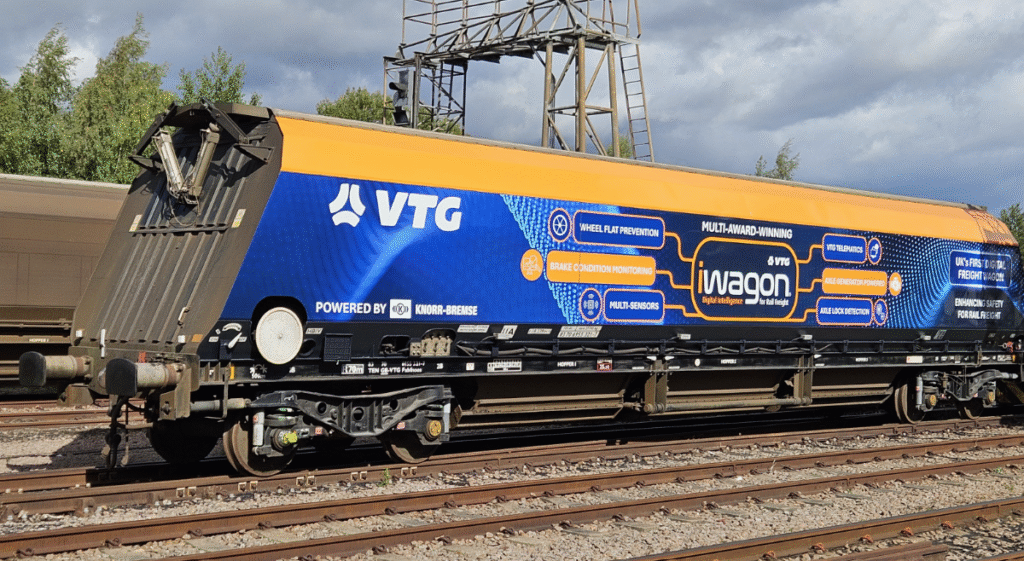
The End of the “Dumb” Wagon: How Knorr-Bremse’s Digital FreightControl System Modernises VTG’s Fleet

For more than a century, freight wagons have been the simplest vehicles in the railway ecosystem: steel structures, mechanical brake rigging, and very little onboard intelligence. While locomotives, signalling, and infrastructure digitised, the freight wagon remained largely unchanged. That gap is closing. VTG Rail UK, one of Europe’s largest wagon leasing companies, has announced a

The End of the “Dumb” Wagon: How Knorr-Bremse’s Digital FreightControl System Modernises VTG’s Fleet Read More »