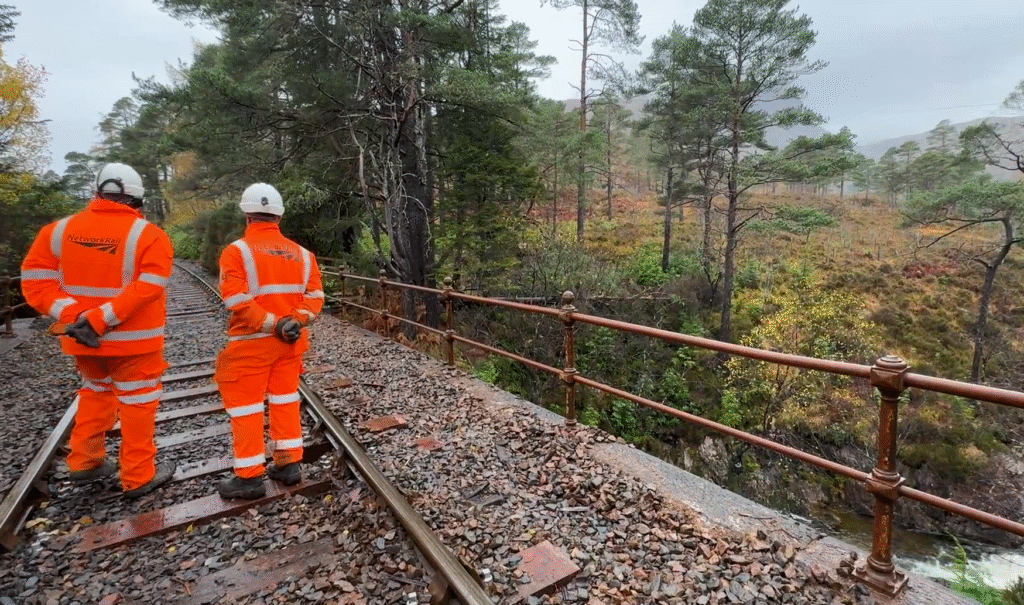
The carbon footprint of railway infrastructure is influenced not only by train operations but also by the materials used to build and maintain the network. Steel rails, which require significant energy to produce, are a major contributor to indirect (Scope 3) emissions for infrastructure managers.
This year, DB InfraGO, Germany’s rail infrastructure manager, placed an order with Saarstahl Rail for approximately 1,000 tonnes of lower-emission steel rails. This marks one of the first verified instances of a major European railway procuring rails produced using a lower-carbon manufacturing route.
What is the order about ?
Procurement
- DB InfraGO ordered ~1,000 tonnes of CO₂-reduced steel rails from Saarstahl Rail.
- Industry reports state that this quantity corresponds to approximately 22 km of rail, depending on rail profile and installation specifics.
- These rails are scheduled to be installed in regions including North Rhine-Westphalia, Rhineland-Pfalz, and Saarland, as reported in industry press.
The Production Method
- The steel is produced through the Electric Arc Furnace (EAF) process at Saarstahl’s facilities (including Saarstahl Ascoval in France).
- The EAF method uses scrap steel as the primary material input.
- Compared with the traditional blast-furnace/basic-oxygen-furnace route, the EAF route generally results in lower CO₂ emissions.
- Saarstahl markets these products under its “Low Emission Steel Standard (LESS)” category.
Reported Emissions Reduction
- Public reports covering this procurement cite reduced CO₂ emissions compared to conventional steel rail production.
- Some industry reports mention an estimated ~1,800 tonnes of CO₂-equivalent savings for the 1,000-tonne order.
- This figure reflects what has been reported in trade publications, not independently audited emissions data.
Safety and Technical Requirements
- Rails supplied to DB InfraGO — whether conventional or CO₂-reduced — must comply with established European standards for rail hardness, wear resistance, and safety.
- Saarstahl Rail has stated that its CO₂-reduced rails meet standard rail performance requirements.
Why This Matters This procurement is a verified example of a national rail infrastructure operator purchasing lower-emission steel rails.
- It demonstrates that CO₂-reduced steel can be produced in rail profiles required for mainline railway networks.
- It also confirms that EAF-based rail production is commercially available and being supplied to major operators.
- The order adds to similar lower-emission rail contracts placed by other European rail infrastructure companies in recent years.
DB InfraGO’s order of approximately 1,000 tonnes of CO₂-reduced rails from Saarstahl Rail represents a factual, documented step toward reducing the embedded emissions of rail infrastructure materials.
While the order size is modest relative to the needs of a national rail network, it is a confirmed instance of a large railway operator integrating lower-emission steel into its procurement.
This development reflects the growing availability of CO₂-reduced steel products — produced through scrap-based Electric Arc Furnaces — within the European rail supply chain.