For decades the phrase “Indonesian Railways” has been almost synonymous with the island of Java. Java hosts a dense, busy network carrying millions of passengers daily, whereas many of the outer islands—Sumatra, Kalimantan and Sulawesi—have remained less integrated, relying heavily on road and river transport.
Recently the Indonesian government signalled a marked shift in strategy. According to industry sources, PT Kereta Api Indonesia (KAI) is preparing to launch a major expansion of rail infrastructure on the outer islands beginning in 2026. This is less an incremental passenger-rail project and more a strategic move to re-engineer the country’s freight supply-chain networks.
By moving from a “Passenger-First” mindset on Java towards a “Commodity-First” emphasis on the outer islands, Indonesia is laying the groundwork for what could become a heavy-haul freight era.
The Strategic Pivot: From People to Commodities
The economics of the islands differ significantly: Java is the consumption centre; the outer islands contain much of the production base. Logistics costs in Indonesia remain a major constraint: some studies estimate these costs at around 14% of GDP in 2023. This compares poorly with other ASEAN nations and underlines the need for lower-cost freight infrastructure.
The government has specifically highlighted bulk commodities such as nickel (used in EV-battery supply chains), coal, and palm oil as high-impact areas for improvement in freight transport efficiency.
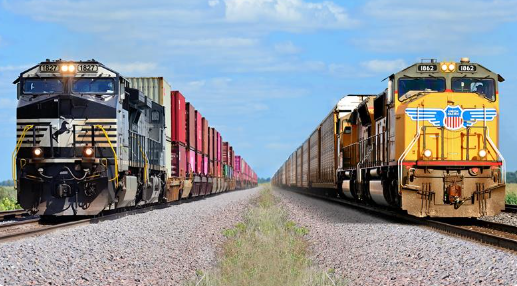
A single heavy-haul train may replace hundreds of trucks, significantly lowering cost per tonne-kilometre. For commodity exports, any meaningful reduction in transport cost can enhance global competitiveness.
The Gauge Question: 1,067 mm vs 1,435 mm
From an engineering perspective, the gauge choice is significant. On Java, the legacy 1,067 mm (3 ft 6 in) gauge remains dominant. While sufficient for passenger services, it constrains axle-load potential and wagon dimensions compared with standard gauge.
On the outer islands there are plans for new lines built on 1,435 mm (standard gauge). For example, the Trans‑Sulawesi Railway (Makassar–Parepare section) is already under construction at 1,435 mm gauge. Standard gauge theoretically allows for heavier axle loads, wider wagons, and potentially higher speeds—and also opens up more options for rolling-stock procurement from global heavy-haul suppliers.
The “Nusantara” Factor: Kalimantan’s Role
The expansion into Kalimantan (Borneo) is closely tied to Indonesia’s move to a new administrative capital, Nusantara, and broader resource-logistics security. Kalimantan is rich in coal and other bulk commodities. A dedicated rail corridor here could function similarly to the heavy-haul “coal lines” in Australia or South Africa—moving large volumes from mine to port with maximum efficiency.
Engineering Challenges: Building on “Soft” Terrain
While the concept is strong, actual civil-engineering execution will be demanding. For example:
In Sumatra: alignment must often traverse dense jungle, requiring viaducts and sensitive ecological management.
In Kalimantan: large tracts lie on peat soils—ground that can behave like a sponge under heavy loads. Achieving stable heavy-haul track infrastructure will require advanced ground-improvement techniques (pile-slab foundations, deep soil mixing) and will raise construction cost per km significantly compared to Java.
The 2026 expansion plan marks a potential turning point: Indonesia may move beyond being “Java-centric” and begin leveraging its outer islands as integrated industrial and export corridors. By deploying standard-gauge heavy-haul infrastructure on Sumatra, Kalimantan and Sulawesi, PT KAI and the government are laying track for a lower-cost, higher-volume freight era.
If executed successfully, the shift could reduce logistics costs, unlock bulk-commodity value, and reshape Indonesia’s position in the Southeast-Asian supply-chain map
Sources:
Jakarta Globe News : Click Here
Antara News : Click Here