For more than a century, freight wagons have been the simplest vehicles in the railway ecosystem: steel structures, mechanical brake rigging, and very little onboard intelligence. While locomotives, signalling, and infrastructure digitised, the freight wagon remained largely unchanged.
That gap is closing.
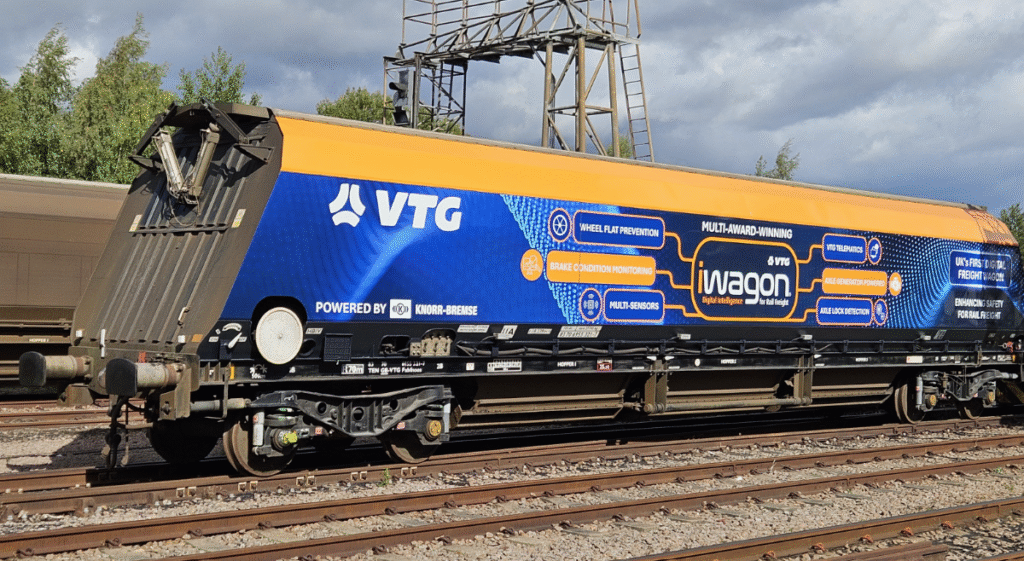
VTG Rail UK, one of Europe’s largest wagon leasing companies, has announced a major agreement with Knorr-Bremse to equip 2,000 new wagons with FreightControl Sentinel by 2029. This represents one of the most substantial European deployments of digitally enabled freight wagons to date.
Rather than incremental improvement, the technology shifts wagon maintenance from a reactive approach to a condition-based, data-driven model. Below is a technical breakdown of what changes and why it matters.
1. The Core Problem: Limited Visibility Into Wagon Health
Freight operations face a long-standing challenge: the locomotive driver has almost no real-time insight into the condition of the wagons behind them.
Why This Is a Risk
Wheel flats:
Caused by locked wheels during braking (from stuck valves, cold-weather issues, or partially applied handbrakes).
Consequences:
Flat spots generate high-impact loads at every wheel revolution. This can:
– Damage rails and sleepers
– Accelerate bearing wear
– Trigger safety alarms
Current industry detection:
Issues are often identified only when trains pass Hot Axle Box Detectors (HABD), Wheel Impact Load Detectors (WILD), or other trackside monitoring systems.
By the time these devices detect an issue, the damage is usually already significant, requiring unscheduled inspections and line blockages.
Why On-Wagon Monitoring Matters
Trackside systems are effective but intermittent. A digital wagon provides continuous monitoring instead of snapshots.
2. The Solution: FreightControl Sentinel and Wagon-Based WSP
Knorr-Bremse’s FreightControl Sentinel system introduces technologies normally associated with modern passenger trains:
Wheel Slide Protection (WSP) for Freight
A major component is wagon-mounted WSP:
How it works:
Sensors on each axle detect rotational speed.
If a wheelset decelerates abnormally (indicating an imminent lock-up), the local WSP valve momentarily reduces brake cylinder pressure.
Outcome:
– Prevents wheel flats
– Reduces damage to track and running gear
– Improves braking performance in low-adhesion conditions
This is a major step-change, as freight wagons traditionally rely on purely pneumatic, non-intelligent braking systems.
3. Creating the “Digital Wagon”: Power + Telemetry + Diagnostics
FreightControl Sentinel integrates digital components on the wagon:
Key Capabilities
On-wagon power supply:
Via axle-driven generators or long-life batteries.
Telemetry and sensor suite:
– Brake system status
– Bearing temperatures
– Load status
– Component wear indicators
Fleet visibility:
VTG fleet managers gain real-time insight into both location and technical condition.
Shift to Condition-Based Maintenance
Data enables maintenance based on actual wear, not fixed intervals.
Benefits include:
- Fewer unnecessary workshop visits
- Higher fleet availability
- Earlier detection of developing faults
This aligns freight with the reliability strategies already standard in aviation, automotive, and modern passenger rail.
4. Strategic Impact: Rail Freight Competitiveness
Digital wagons address long-standing barriers to modal shift from road to rail:
- Reliability
- Unexpected wagon failures (hot axle boxes, brake issues, wheel flats) are a major cause of:
– Train delays
– Unscheduled line closures
– Shipper dissatisfaction
Reducing these failures directly improves service quality.
Infrastructure Benefits
Digital wagons provide measurable reductions in:
- Wheel impact forces
- Track wear
- Unplanned interventions
In the long term, infrastructure managers may consider differentiated access charges for wagons that generate lower maintenance impact — a discussion already underway in parts of Europe.
The VTG–Knorr-Bremse agreement marks a significant milestone in freight wagon digitalisation.
By equipping 2,000 wagons with advanced braking control and continuous condition monitoring, the industry moves toward a future where freight wagons are intelligent, self-diagnosing assets rather than passive vehicles.
This programme is likely to become a reference point for future European fleet upgrades and a catalyst for broader adoption of digital freight technologies.
Sources:
Knorr-Bremse Newsroom : Click Here
Knorr-Bremse Newsroom : Click Here