
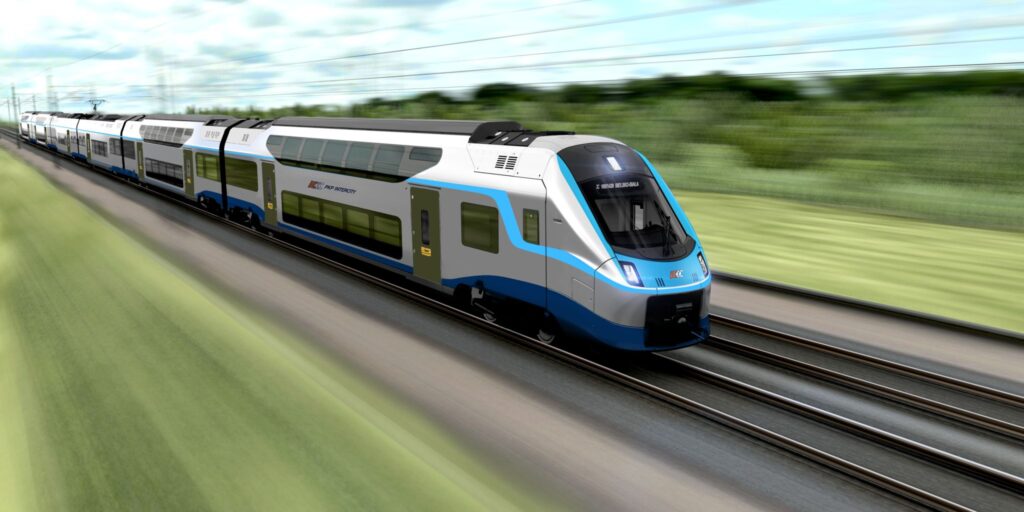
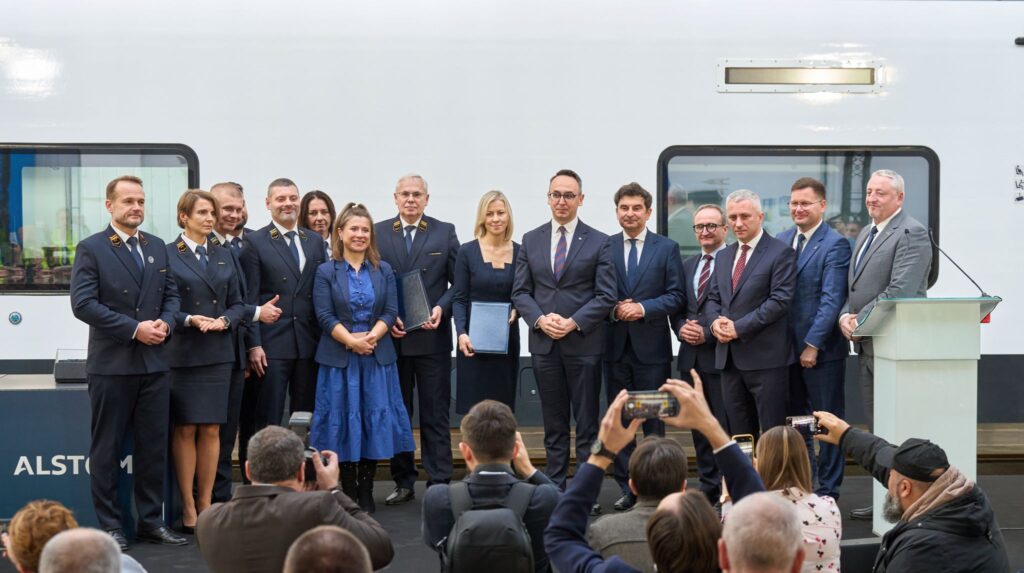
Alstom and PKP Intercity, Poland finalized a landmark agreement that will serve as a cornerstone for the next generation of Polish rail travel. The deal, which includes 42 new Coradia Max trains and a comprehensive long-term maintenance contract, is more than just a fleet upgrade—it’s a fundamental investment in capacity, efficiency, and cross-border connectivity.
While the 42-train figure is newsworthy on its own, the true significance of this deal lies in what it signals for PKP’s strategy and the wider European rail market. We’ve broken down the key impacts of this major announcement.
Contract value: PLN 6.9 billion (with maintenance).
The vehicles will be built in Poland, Chorzów and Nadarzyn — in modern plants employing about 2.5 thousand people.
The first trains will appear on the tracks in 3.5 years and will serve the most popular domestic routes – from Warsaw to Gdańsk, Krakow, Wrocław, Olsztyn, Łódź, Białystok and Terespol.
Each train will offer over 550 seats, quiet zones, space for families, spaces for bicycles and luggage. On board: ergonomic seats, Wi-Fi, sockets, USB, LED infotainment system and air conditioning.
- The Technology: What is the Coradia Max?
The choice of the Coradia Max platform is a deliberate one. These are not standard commuter trains; they are high-capacity, multi-system electric multiple units (EMUs) designed for fast, high-volume intercity services.
Solving the Capacity Crunch: The Coradia Max is a double-decker train, offering a significant increase in seating and standing room over single-level fleets. This directly addresses the growing demand for rail travel and network congestion.- Solving the Capacity Crunch: The Coradia Max is a double-decker train, offering a significant increase in seating and standing room over single-level fleets. This directly addresses the growing demand for rail travel and network congestion.
- Built for speeds up to 200 km/h: These trains are engineered for the modernized Polish network, capable of speeds that will drastically cut down journey times between major hubs like Warsaw, Krakow, and the Tri-City area.
- Interoperability: Crucially, the Coradia Max platform is designed with European interoperability in mind, potentially opening the door for PKP Intercity to streamline routes into neighboring countries like Germany and the Czech Republic.
- The Strategy: Why the “Full-Service” Deal is a Game-Changer
Perhaps the most telling detail in the announcement is the inclusion of a “full-service maintenance” contract. This is a significant trend in modern rolling stock procurement.- From Asset Purchase to “Uptime”: PKP Intercity isn’t just buying trains; it’s buying guaranteed availability. By handing maintenance over to the OEM (Alstom), PKP ensures its fleet meets reliability targets and manages its operational costs (OpEx) with predictability.
- Shifting Risk: This model shifts the long-term risk of performance, component failure, and specialized maintenance from the operator to the manufacturer. Alstom is now incentivized to ensure its own trains run flawlessly.
- The Market: A “New Era for Polish Rail”
This deal is one of the largest rolling stock investments in the CEE region in recent years. It sends a clear message:- Poland is All-In on Modern Rail: This investment reaffirms Poland’s commitment to shifting passengers from road and air to rail, a key pillar of the EU’s Green Deal.
- A Benchmark for the Region: This sets a new standard for intercity travel in Eastern Europe. As this new fleet comes online, passenger expectations will rise, putting pressure on neighboring operators to modernize their own services.
The Alstom-PKP deal is a multifaceted win. PKP Intercity secures a state-of-the-art fleet and predictable maintenance costs. Alstom solidifies its dominant position as a supplier in the CEE market. And passengers will ultimately benefit from a more comfortable, faster, and more reliable rail network. This is precisely what a “new era” of rail travel looks like.
Source: Alstom Press Release Click Here